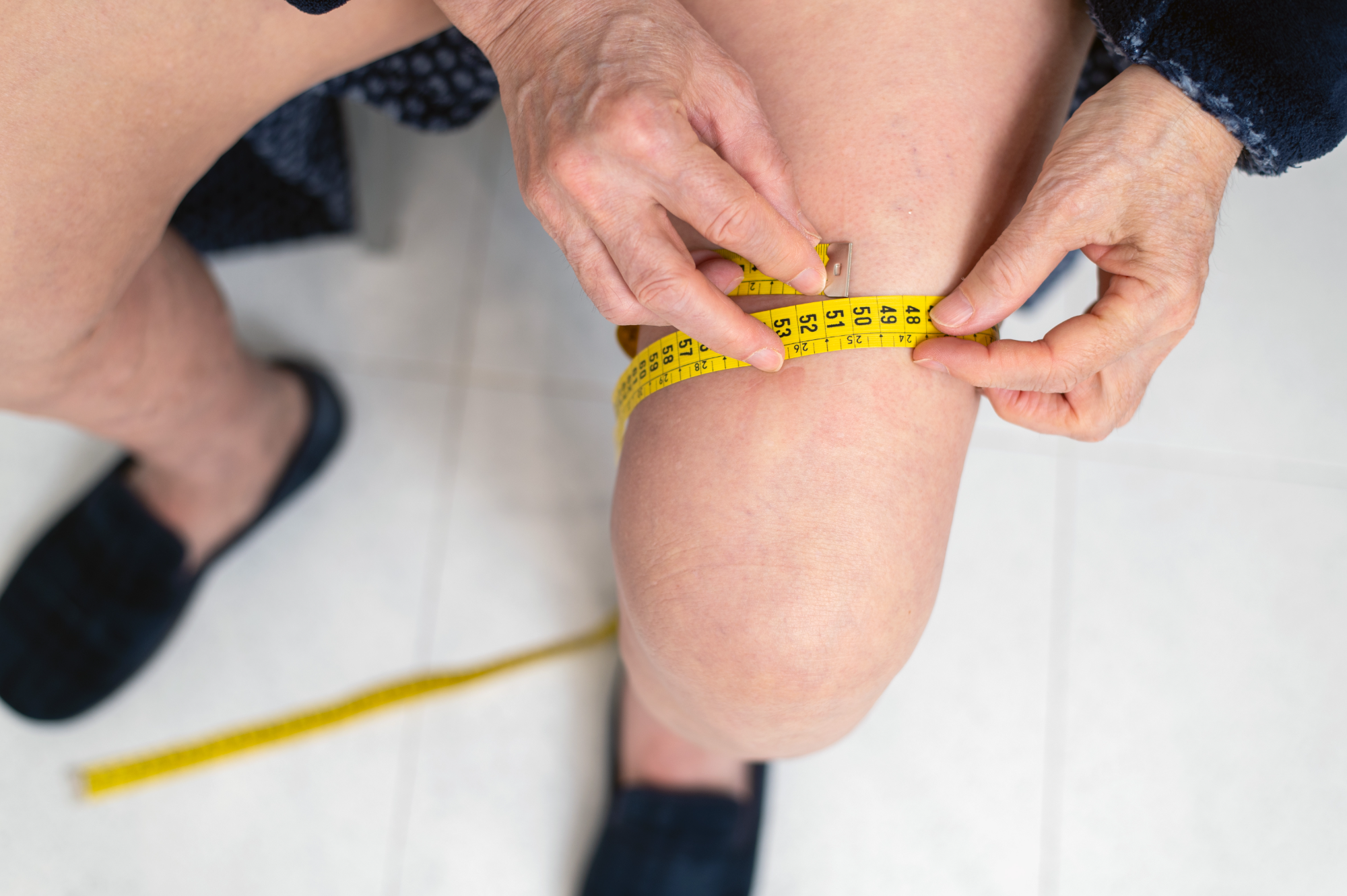
What is lymphedema? It is chronic swelling caused by a lymphatic system that can’t drain fluid properly. The lymphatic system is a network of vessels and nodes that carries excess fluid, proteins and immune cells out of the body’s tissues and back into the bloodstream. When that network is underdeveloped or damaged, protein-rich fluid collects under the skin and the affected area swells.
Lymphedema most often affects an arm or leg, but it can also involve the hands, feet, trunk, breast, head and neck, or genitals. It is chronic and tends to progress without treatment. With early diagnosis and consistent care, most people can reduce swelling and keep it under control.
How lymph drains
Fluid, proteins and immune cells leave the blood and bathe the body’s cells.
Collect the excess fluid and carry it away from the tissue.
Filter the fluid and help the body fight infection.
Filtered fluid rejoins circulation near the collarbone.
Signs to watch for
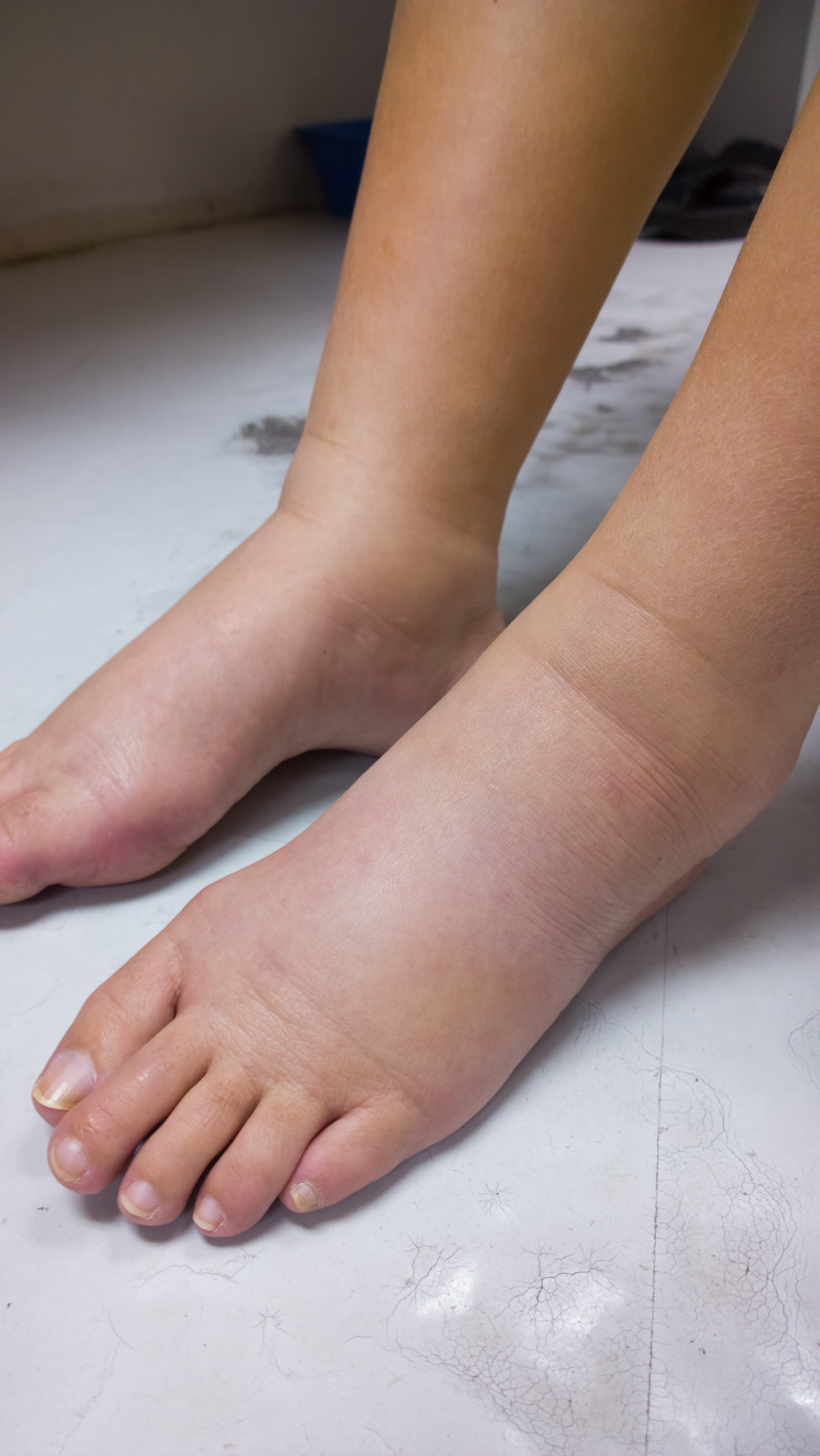
- Swelling in an arm, leg, hand or foot, sometimes only at the end of the day
- A feeling of heaviness, tightness or fullness in the limb
- Rings, watches, sleeves or shoes that feel tighter than usual
- Reduced flexibility in the wrist, ankle or other nearby joints
- Skin that thickens, hardens or no longer dents when pressed
- Repeated skin infections (cellulitis) in the same area
People with a history of any of these
Cancer treatment
Lymph node removal or radiation for breast, melanoma, gynecologic, prostate, or head and neck cancer.
Vein disease
Chronic venous insufficiency, varicose veins or past blood clots in the legs.
Surgery or injury
Orthopedic, vascular or abdominal surgery, and trauma that damages lymph vessels.
Chronic wounds
Leg ulcers or wounds that are slow to heal.
Recurrent infection
Repeated cellulitis in the same arm or leg.
Excess weight
Obesity can overload the lymphatic system, especially in the legs.
Limited mobility
Long periods sitting or lying down, including in nursing facilities.
Family history
Primary lymphedema and lipedema can run in families.
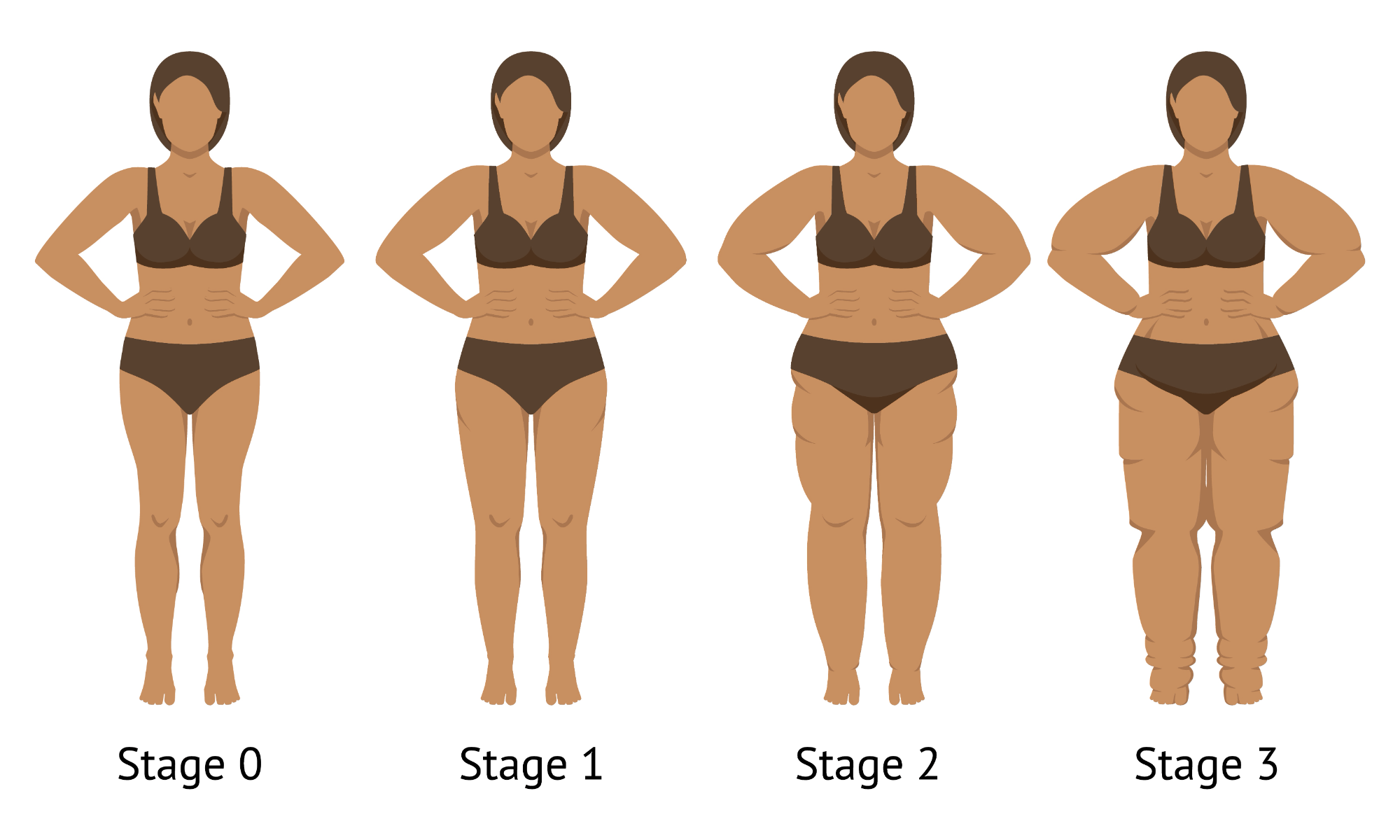
How lymphedema progresses
Soft swelling that pits when pressed and often goes down with elevation.
Staging follows the International Society of Lymphology classification.
Earlier is easier to treat
Request an evaluation if any of these apply to you. Early-stage lymphedema responds best to treatment.
- Swelling that has lasted more than a few weeks without a clear explanation
- Any new swelling after cancer surgery or radiation, even if mild
- One arm or leg that is noticeably larger than the other
- Compression stockings that no longer help, or no longer fit
- Wounds that keep coming back, or repeated cellulitis
- Skin that is thickening, hardening or changing texture
Sudden, painful swelling in one leg, a red and hot limb with fever, or swelling with chest pain or shortness of breath needs same-day medical attention. Call 911 or go to the nearest emergency room.
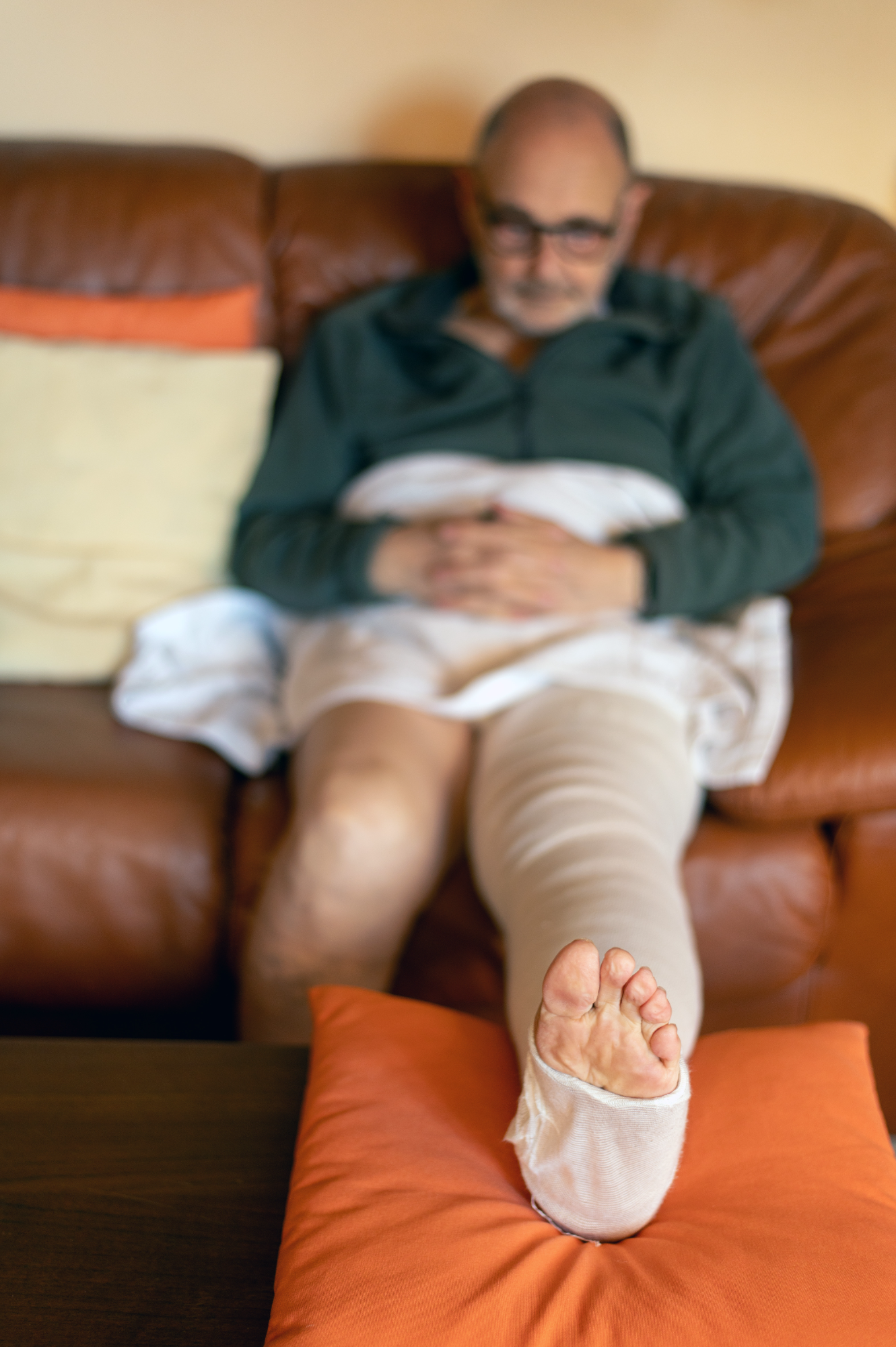
Swelling that won’t go away deserves a specialist.
Request an evaluation with a certified lymphedema therapist, or call (405) 449-4491.